Saturday, March 29, 2014
Tuesday, March 25, 2014
Thursday, December 12, 2013
Signs I have not seen in the US
A sign over the single portion ice cream at a wholesale grocer in Tamworth.
At the entry to a building in Wolverhampton.
Dispensing chemists in the UK are what we call pharmacists in the USA.
Ah, marketing ploys. This is in Stratford-upon-Avon, in case you didn't guess!
At the entry to a building in Wolverhampton.
Dispensing chemists in the UK are what we call pharmacists in the USA.
Ah, marketing ploys. This is in Stratford-upon-Avon, in case you didn't guess!
| It must work. I saw no anti-social behaviour when we rode the train! |
| Leaving the car park (parking lot) at a neighborhood store. |
| Ironmongery! I have only seen this word in novels! |
| Pukka is pronounced puck-a, not puke-a, as I first imagined! |
Sunday, December 8, 2013
Downtown Birmingham Christmas Market
Friday night, 6 December, we took the train to Birmingham! We walked through the German Market and then by this market on our way to Symphony Hall, where we heard the Messiah. What a wonderful evening!
Monday, December 2, 2013
A thought for Thanksgiving:
President Rasmussen shared this anonymous poem in his weekly letter to missionaries. He counseled us to "learn to be grateful for the blessings we didn't ask for. "
I asked God for strength, that I might achieve.
I was made weak, that I might learn humbly to obey.
I asked for health, that I might do greater things.
I was given infirmity, that I might do better things.
I asked for riches, that I might be happy.
I was given poverty, that I might be wise.
I asked for power, that I might have the praise of men.
I was given weakness, that I might feel the need of God.
I asked for all things, that I might enjoy life.
I was given life that I might enjoy all things.
I got nothing that I asked for—but everything I had hoped for.
Almost despite myself, my unspoken prayers were answered.
I am, among all men, most richly blessed.
President Rasmussen shared this anonymous poem in his weekly letter to missionaries. He counseled us to "learn to be grateful for the blessings we didn't ask for. "
I asked God for strength, that I might achieve.
I was made weak, that I might learn humbly to obey.
I asked for health, that I might do greater things.
I was given infirmity, that I might do better things.
I asked for riches, that I might be happy.
I was given poverty, that I might be wise.
I asked for power, that I might have the praise of men.
I was given weakness, that I might feel the need of God.
I asked for all things, that I might enjoy life.
I was given life that I might enjoy all things.
I got nothing that I asked for—but everything I had hoped for.
Almost despite myself, my unspoken prayers were answered.
I am, among all men, most richly blessed.
Monday, October 28, 2013
British Politeness
Just last night we were taking two people home. One of them, Louise, joined the church last spring and had commented she had not seen many of the chapels in the Stake. Since we were driving past the Walsall building, we offered to make a quick detour so she could see the chapel and its spacious lawn. She replied "I don't mind." Not sure what that meant, I asked her to translate from British to American. She replied it means "Whatever you want to do." Realizing (realising if you are British) that she politely did not want to inconvenience us, we showed her the building!
I am reminded of this delightful translation of British Speak found on the website for the Telegraph:
http://www.telegraph.co.uk/news/newstopics/howaboutthat/10280244/Translation-table-explaining-the-truth-behind-British-politeness-becomes-internet-hit.html
I am reminded of this delightful translation of British Speak found on the website for the Telegraph:
http://www.telegraph.co.uk/news/newstopics/howaboutthat/10280244/Translation-table-explaining-the-truth-behind-British-politeness-becomes-internet-hit.html
The British trait of being too polite to speak one's mind has led to a table translating numerous hollow English phrases becoming an internet hit.
The table sheds light on just how difficult it can be for a foreigner to
understand what the British really mean when they're speaking – especially
for those take every word at face value.
Phrases that prove the trickiest to decipher include 'you must come for
dinner', which foreigners tend to take as a direct invitation, but is
actually said out of politeness by many Britons and often does not result in
an invite.
The table also reveals that when a person from Britain begins a sentence "with
the greatest respect ...', they actually mean 'I think you are an idiot'.
_________________________________________________________________________________
_________________________________________________________________________________
The table points out that when Britons say 'I'm sure it's my fault', it actually means 'it's your fault'.
_________________________________________________________________________________
| WHAT THE BRITISH SAY | WHAT THE BRITISH MEAN | WHAT FOREIGNERS UNDERSTAND |
|---|---|---|
| I hear what you say | I disagree and do not want to discuss it further | He accepts my point of view |
| With the greatest respect | You are an idiot | He is listening to me |
| That's not bad | That's good | That's poor |
| That is a very brave proposal | You are insane | He thinks I have courage |
| Quite good | A bit disappointing | Quite good |
| I would suggest | Do it or be prepared to justify yourself | Think about the idea, but do what you like |
| Oh, incidentally/ by the way | The primary purpose of our discussion is | That is not very important |
| I was a bit disappointed that | I am annoyed that | It doesn't really matter |
| Very interesting | That is clearly nonsense | They are impressed |
| I'll bear it in mind | I've forgotten it already | They will probably do it |
| I'm sure it's my fault | It's your fault | Why do they think it was their fault? |
| You must come for dinner | It's not an invitation, I'm just being polite | I will get an invitation soon |
| I almost agree | I don't agree at all | He's not far from agreement |
| I only have a few minor comments | Please rewrite completely | He has found a few typos |
| Could we consider some other options | I don't like your idea | They have not yet decided |
The table points out that when Britons say 'I'm sure it's my fault', it actually means 'it's your fault'.
It also reveals that 'very interesting' can often mean 'that is clearly
nonsense'.
The table, which has been posted on an number of blogs, has attracted thousands of comments from both Britons and foreigners claiming the interpretations are true to life.
Duncan Green, a strategic adviser for Oxfam who posted it online, described it as "a handy guide for our fellow Europeans and others trying to fathom weaselly Brit-speak".
Mr Green said: "Sadly, I didn’t write it. It’s just one of those great things that is being passed around on the internet."
Although the author of the table is unconfirmed, it is thought it may have originally been drawn up by a Dutch company as an attempt to help employees working in the UK.
The table, which has been posted on an number of blogs, has attracted thousands of comments from both Britons and foreigners claiming the interpretations are true to life.
Duncan Green, a strategic adviser for Oxfam who posted it online, described it as "a handy guide for our fellow Europeans and others trying to fathom weaselly Brit-speak".
Mr Green said: "Sadly, I didn’t write it. It’s just one of those great things that is being passed around on the internet."
Although the author of the table is unconfirmed, it is thought it may have originally been drawn up by a Dutch company as an attempt to help employees working in the UK.
Sunday, October 20, 2013
More signs that gave me the giggles
| I think most of us parents are quite capable of offending youth without any help! |
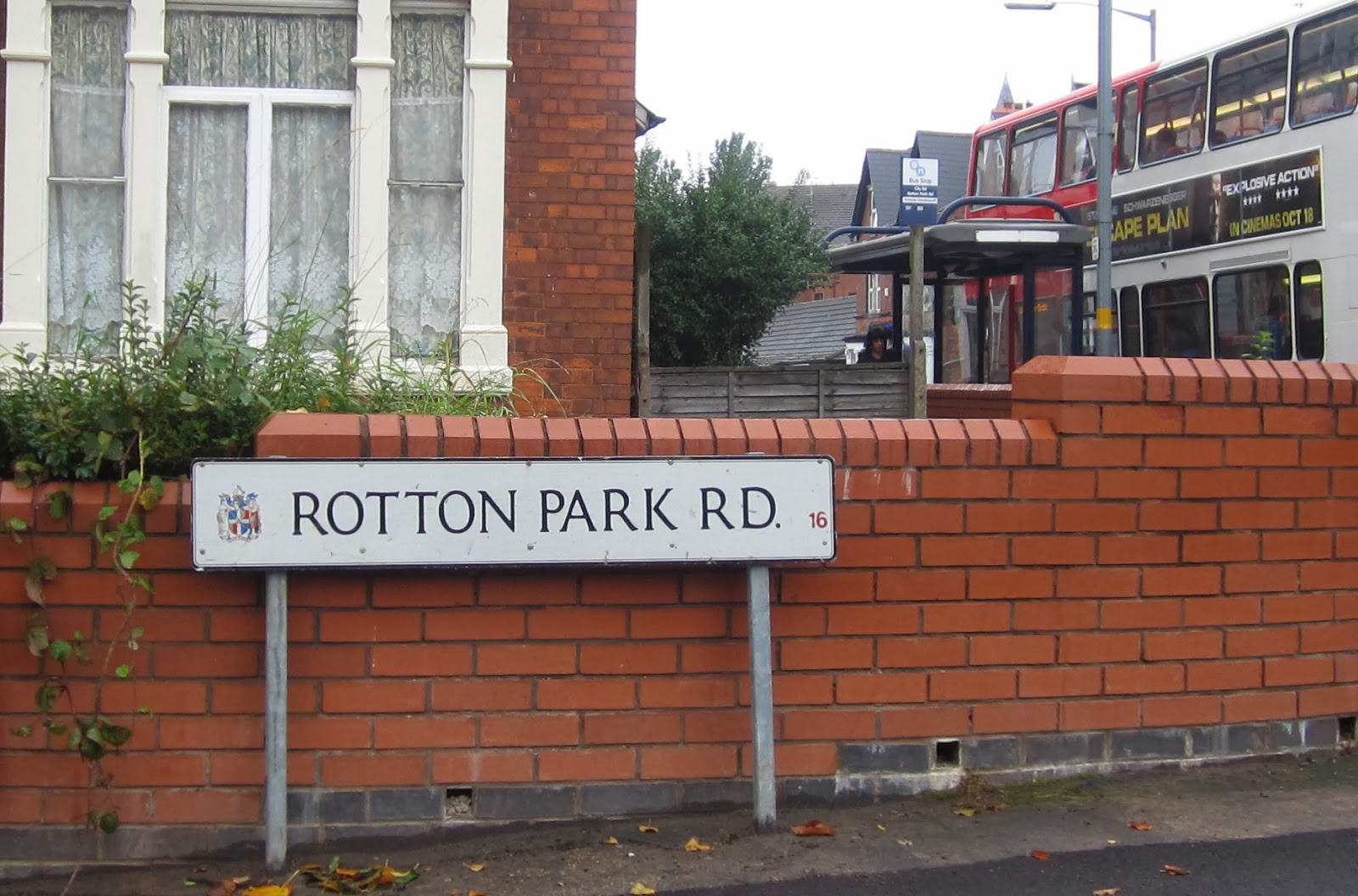
| Well, it is not as fun as Rotten Row, but Rotton Park is pretty good. |
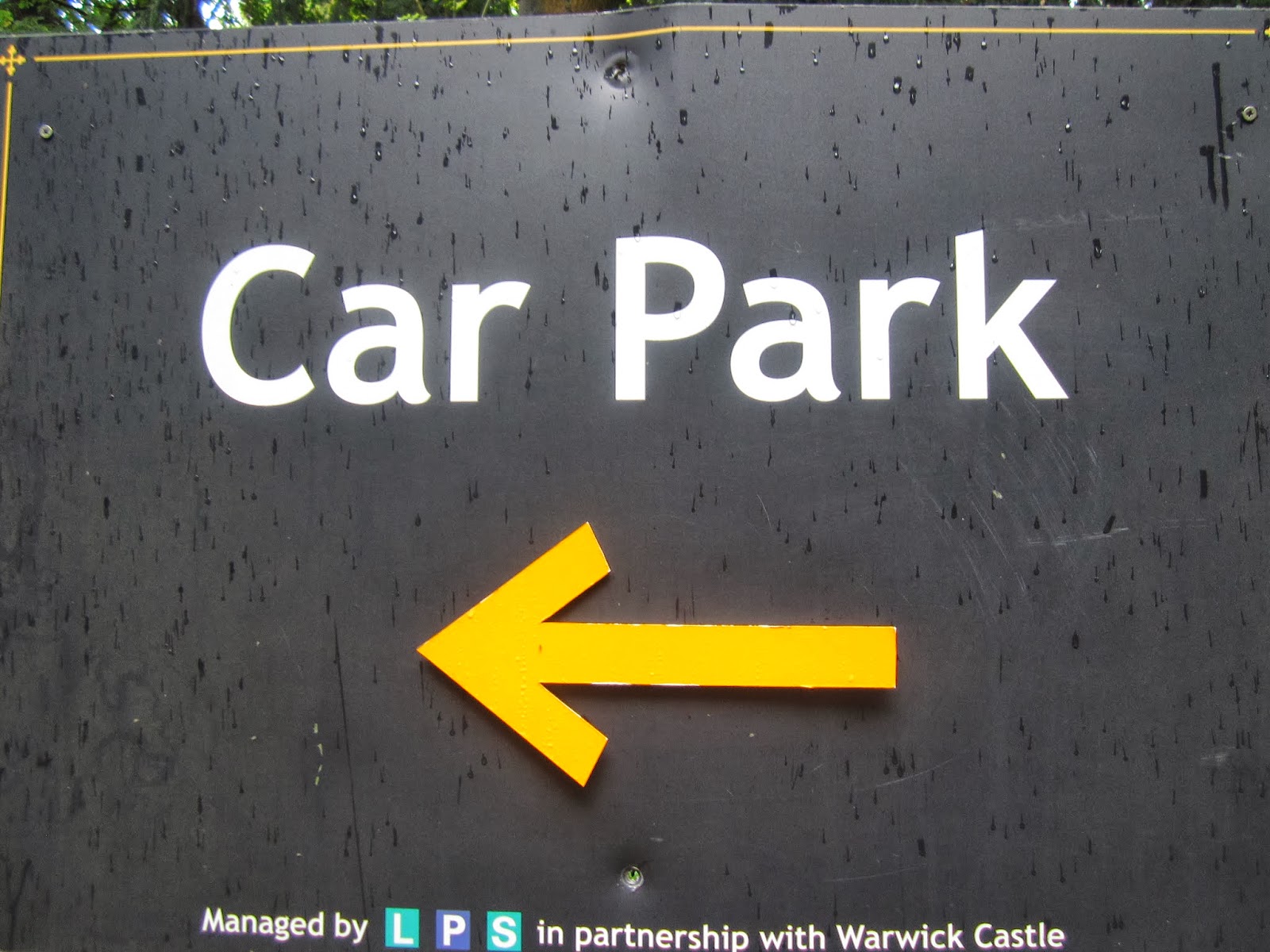
When we saw a sign like this, it was too dark to take a photo. I am so glad someone posted a photo online. Then I giggled when I saw the second photo.
Sunday, October 13, 2013
The words are the same, but the language is different
| Pushchair = Stroller |
| The word "scheme" has a negative connotation in America. Here we have seen traffic management schemes, flood basin control schemes, and this crime prevention scheme. |
| No, the cars don't have their own spot for recreation, unless there is something we don't know about :) |
| Give Way = Yield |
| Hmm. Baby feed. |
Friday, October 11, 2013
Fresh Produce
| This is a Bramley apple, grown here in England. |
| I have seen celeriac before, but never bought it. I made it into a wonderful soup |
| These were the best and biggest raspberries we have ever tasted! |
Thursday, October 10, 2013
Creative Names for Day Nurseries (day care centers)
| the Paint Pot Nursery School |
| Every time we drive past this day care I giggle at the name. I hope the place is as happy as its name. |
| The entrance to Chuckle Bunnies |
| This child care is called "The Honey Pot Day Nursery." I laughed when my first thought was of a honey bucket! Somehow that seems to fit a place that has to deal with lots of diaper changing! |
Wednesday, October 9, 2013
Gadfield Elm Trip Tuesday 8 October 2013
Benbow Pond is located on "Hill Farm," situated on a high hill with a beautiful view. It is privately owned, but the owner allows people to come on the property to see the pond. The farm house is still standing, along with many outbuildings, and obviously was and still is a prosperous farm. As we walked down the hill, I felt a sweet calm. We had a short program there, including a song by our own Sister Jensen who serves in Lichfield. (It was pretty slick. The accompaniment was played on Pres. Rasmussen's IPad.!) Sis. Jensen has a beautiful, sweet, and clear voice. We learned how Wilford Woodruff was teaching in Staffordshire (near where we live) when he felt prompted to leave and travel south. He came to the farm of John Benbow, brother of recent convert William Benbow, and there taught the gospel long into the night and for quite a time afterwards.
The Benbows were part of a group of religious non-conformists who called themselves the United Brethren. I took a photo of a copy of their preaching schedule. Every night, they were preaching at a home in the area. As we were there, I thought of some of my ancestors, including the devout Dunns, who were Quakers and then Methodists, and Solomon Fry and his family devout members and preachers in the Evangelical Association. They truly were seeking God's truth. I feel a deep appreciation for my ancestors, sincere people who loved God and sought to find and do his will.
After Benbow pond, we drove about 20 minutes to the Gadfield Elm chapel, which was converted into a Latter-day Saint chapel after 600 of the 601 members of the United Brethren were baptized members of the Church of Jesus Christ of Latter-day Saints. It is the oldest extant chapel in the world. It is humble building of rock. We had a beautiful presentation there and took photos. I felt a very strong Spirit at that site.
As we drove away from Gadfield Elm, Elder Kendall said it was constructed in such an unassuming way to avoid persecution from the church hierarchy in the area. He taught us of the Church of England's parish system in the 1800's and what Brigham Young called "hireling priests."
We then had lunch and an activity in the chapel in Gloucester, another 20 minute drive away, and then headed for home.
What a wonderful day! We greatly appreciate the opportunity President Rasmussen gave us.
| Outside Gadfield Elm chapel. |
| Senior Missionaries outside Gadfield Elm chapel. |
| Here I am with the most handsome senior missionary in the England Birmingham Mission! |
| Our District Leader standing at the pulpit where many Apostles have taught. He is from Barcelona, Spain. The British love his accent! |
| This new elder is from Germany. He just arrived in the mission three weeks ago. |
Benbow Pond at Hill Farm near Castle Fromme
| President Rasmussen at the close of our meeting at Benbow Pond. |
| The farmhouse where John Benbow lived. It appears that many of the outbuildings would have been standing in 1840. |
| My favorite missionary again! |
| It has been a dry year, so the water level is low in Benbow pond. |
Wilford Woodruff at Hill Farm
On 4 March 1840, Elder Wilford Woodruff, and Apostle of The Church of Jesus Christ of Latter-day Saints, and William Benbow, a recent convert, visited John and Jane Benbow here at Hill Farm. Sent from America to preach by Church president Joseph Smith, Elder Woodruff had been teaching and baptising in the Staffordshire area when he was prompted by the Lord to journey southward. William brought him here to his brother's home. John Benbow, a yeoman farmer and freeholder of this property, and his wife were affiliated with the United Brethren, a group of dissenters from the Primitive Methodist Church who held meetings here. Elder Woodruff's journal records: 'I told Mr. Benbow I would like to commence my Master's business by preaching the gospel to the people.... I also preached at the same place on the following evening, and baptised six persons, including Mr. John Benbow, his wife, and four preachers of the United Brethren. I spent most of the following day in clearing out a pool of water and preparing it for baptising, as I saw that many would receive that ordinance. "I continued to preach and baptise daily. The first thirty days after my arrival in Herefordshire, I had baptised forty-five preachers and one hundred and sixty members of the United Brethren.' By December 1840, Elder Woodruff had baptised more than 300 persons and, together with other missionaries, converted 1200 others in the Malvern area. The Benbows later assisted in financing the first British publication of the Book of Mormon. Elder Woodruff's great missionary success helped create a strong foundation for the Church in Great Britain. 'The people were praying for light and truth,' he wrote, 'and the Lord sent me to them.' This marker placed in commemoration of the 150th anniversary of The Church of Jesus Christ of Latter-day Saints in Great Britain, 1897. This marker was dedicated by Jeffrey R. Holland in 1987.
Subscribe to:
Posts (Atom)